

Dercum’s disease, also called adiposis dolorosa, is a rare disorder involving chronic pain in fatty tissue. The pain may occur throughout larger areas of the body or around individual fatty growths called lipomas. Symptoms can interfere with movement, sleep, work, and other daily activities, yet the condition is frequently difficult to recognize because it can resemble lipedema, fibromyalgia, or other pain and fat disorders.
At the Lymphedema Center in Santa Monica, Dr. Emily Iker evaluates Dercum’s disease in the context of overall tissue health, swelling, and physical function. As an internationally recognized physician, researcher, and educator in lymphatic and fat disorders, she understands the importance of looking beyond body size or isolated symptoms. Each evaluation is intended to clarify the patient’s condition and guide realistic, individualized care.
What Is Dercum’s Disease?
Dercum’s disease is characterized by painful fatty tissue that may be widespread or concentrated around multiple lipomas. It occurs most frequently in women, although it can affect patients of any sex. The underlying cause remains unclear, and the condition can vary considerably from one patient to another.
Several patterns have been described:
- Generalized pain throughout the fatty tissue without distinct lipomas
- Widespread pain with especially tender lipomas
- Painful lipomas limited to particular areas
- Painful fatty tissue concentrated near a large joint, such as a knee or hip
The abdomen, upper arms, thighs, buttocks, and trunk are commonly affected. Pain may be constant or worsen when the tissue is touched or pressure is applied.
What Are the Symptoms of Dercum’s Disease?
Pain is the defining concern, but patients may experience additional symptoms that affect their overall well-being. These can include:
- Tender or painful fatty tissue
- Multiple painful lumps beneath the skin
- Aching, burning, stabbing, or pressure-like pain
- Easy bruising
- Swelling or a feeling of heaviness
- Fatigue and reduced stamina
- Sleep difficulties
- Joint or muscle discomfort
- Difficulty walking or exercising
- Problems with concentration or emotional well-being
These symptoms are not exclusive to Dercum’s disease. A thorough medical evaluation is needed to consider other possible explanations and determine whether more than one condition may be present.
How Is Dercum’s Disease Different From Lipedema?
Dercum’s disease and lipedema can both involve painful fatty tissue, easy bruising, and swelling, but their typical patterns differ. Lipedema usually causes symmetrical enlargement of the hips and legs and sometimes the arms. The hands and feet are generally spared, creating a noticeable stopping point at the ankles or wrists.
Dercum’s disease may cause pain in a wider range of body areas and frequently involves distinct tender lipomas. Its distribution is not always symmetrical. Patients may also have both conditions, making diagnosis more complicated. Neither disorder should be assumed to result simply from lifestyle or ordinary weight gain.
How Is Dercum’s Disease Diagnosed?
There is no single laboratory test or scan that definitively confirms Dercum’s disease. Diagnosis is primarily clinical and requires ruling out other conditions that can cause painful tissue, lipomas, or generalized discomfort.
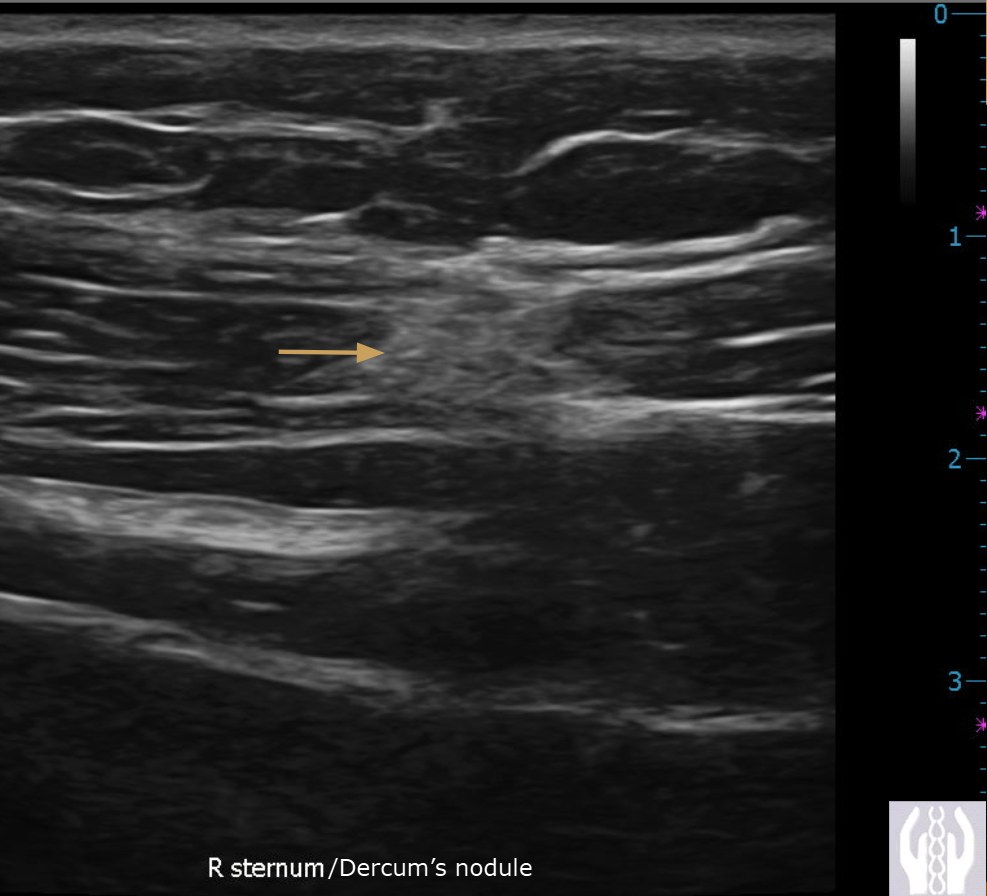
Dr. Iker reviews the location and character of the pain, when symptoms began, and whether the patient has noticed swelling, bruising, fatigue, or changes in mobility. She also evaluates the distribution and texture of the fatty tissue, as well as any palpable growths. Diagnostic ultrasonography may help examine the tissue and identify features that warrant further assessment. Bloodwork, imaging, or referrals to other specialists may be recommended to exclude endocrine, inflammatory, neurologic, or other medical causes.
How Is Dercum’s Disease Managed?
There is currently no standard treatment that works for every patient. Care generally focuses on reducing pain, supporting movement, managing associated swelling, and addressing the condition’s effects on daily life.
Depending on the patient’s symptoms, a care plan may involve:
- Gentle movement or exercise adapted to current abilities
- Manual lymphatic drainage when appropriate
- Compression garments, including the practice’s FDA-approved compression sleeve design when suitable
- Pneumatic compression for selected patients
- Nutritional guidance that supports overall health
- Strategies for protecting tender tissue and maintaining mobility
- Coordination with pain-management or other medical specialists
Some patients may discuss medications, liposuction, or removal of particularly painful lipomas with qualified specialists. However, results can vary, and symptoms may return. Published medical literature emphasizes the need for individualized, multidisciplinary care because evidence for available treatments remains limited.
Why Choose Dr. Emily Iker for Dercum’s Disease Care?
Rare fat disorders can be overlooked when pain, swelling, and changes in body shape are considered separately. Dr. Iker’s focused experience with lipedema, lymphedema, and related tissue disorders gives her a valuable perspective when symptoms do not fit a straightforward diagnosis.
She takes time to consider pain patterns, tissue characteristics, mobility, lymphatic involvement, and the emotional burden of living with a poorly understood condition. Recommendations are tailored to the patient rather than based on a fixed protocol, with coordination across specialties when additional expertise is needed.
Pursue Answers for Painful Fatty Tissue
A specialized evaluation may help clarify whether persistent tenderness, painful lipomas, or swelling is related to Dercum’s disease. Call Lymphedema Center – Emily Iker, MD at (310) 829-7472 to schedule a consultation in Santa Monica, CA.