

Madelung’s disease is a rare disorder that causes multiple fatty masses to grow in a symmetrical pattern, often around the neck, shoulders, upper arms, chest, or upper back. Also known as multiple symmetric lipomatosis, the condition may gradually change a person’s appearance and restrict movement. Larger deposits near the neck can sometimes affect swallowing, speaking, or breathing, making proper evaluation especially important.
At the Lymphedema Center in Santa Monica, Dr. Emily Iker evaluates unusual fat distribution within the broader context of swelling, tissue health, and lymphatic function. Her extensive work with complex adipose and lymphatic disorders helps her recognize when enlargement may reflect something other than ordinary weight gain. Patients receive an individualized assessment and guidance regarding any additional specialists their care may require.
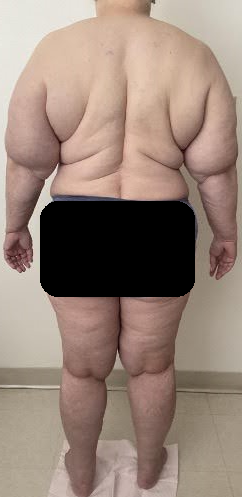
What Is Madelung’s Disease?
Madelung’s disease involves the progressive growth of fatty tissue that is usually painless, poorly defined, and not enclosed within a distinct capsule. Unlike isolated lipomas, these deposits tend to occur bilaterally in a similar distribution.
Commonly affected areas include:
-
The front, sides, or back of the neck
-
The shoulders and upper back
-
The upper arms
-
The chest and upper trunk
-
The abdomen
-
The hips or upper thighs in less common patterns
The exact cause is not fully known. Research has explored possible connections involving how the body breaks down fat, mitochondrial function, and genetic factors. Madelung’s disease has a strong association with long-term heavy alcohol use, but it can also occur in patients without that history. Alcohol use should therefore be considered as one part of the medical evaluation rather than assumed to explain every case.
What Symptoms Can Madelung’s Disease Cause?
Fatty deposits often grow slowly and may initially cause few physical symptoms. As they become larger, patients may notice:
-
Symmetrical fullness around the neck or shoulders
-
A broad or unusually muscular-looking upper body
-
Reduced neck, shoulder, or arm movement
-
Difficulty finding comfortable clothing
-
Pressure, heaviness, or discomfort
-
Numbness, tingling, or muscle weakness
-
Changes in posture
-
Difficulty swallowing or speaking
-
Snoring or symptoms of sleep apnea
-
Shortness of breath in advanced cases
New or worsening difficulty breathing or swallowing requires prompt medical attention. Fatty tissue near the airway or esophagus can create complications that need evaluation by an appropriate specialist.
How Is Madelung’s Disease Different From Dercum’s Disease and Lipedema?
Madelung’s disease, Dercum’s disease, and lipedema all affect fatty tissue, but their typical symptoms and distributions differ.
Madelung’s disease usually causes symmetrical, poorly defined fatty masses around the neck and upper body. These growths are often painless. Dercum’s disease is characterized by chronic pain in fatty tissue and may involve multiple distinctly tender lipomas across varied areas of the body.
Lipedema generally produces symmetrical enlargement of the hips and legs and sometimes the arms. The tissue is frequently tender, bruises easily, and usually stops at the ankles or wrists. Madelung’s disease more commonly affects the neck, shoulders, and trunk.
These patterns are useful, but symptoms can overlap. A patient may also have a separate lymphatic or venous condition contributing to swelling, so enlargement should not be attributed to abnormal fat alone without a thorough evaluation.
How Is Madelung’s Disease Diagnosed?
Diagnosis begins with a medical history and physical examination. Dr. Iker considers when the tissue growth began, how it has progressed, which areas are affected, and whether the patient has pain, swelling, neurologic symptoms, or functional limitations. Associated concerns such as diabetes, thyroid disease, liver disease, abnormal cholesterol levels, or peripheral neuropathy may also require attention.
Ultrasound may help examine the character of the fatty tissue. CT or MRI imaging is often used to define the extent of deeper deposits, particularly around the neck, and determine whether nearby structures are being compressed. A biopsy may be recommended when a growth has unusual features or another diagnosis needs to be excluded.
How Is Madelung’s Disease Treated?
There is currently no medication or lifestyle change known to eliminate existing Madelung’s disease tissue. When the deposits cause functional problems, significant discomfort, or substantial changes in appearance, surgical removal or specialized liposuction may be considered. These procedures require an appropriately qualified surgical specialist, and regrowth can occur after treatment.
Management may also involve:
-
Monitoring the size and distribution of fatty deposits
-
Evaluating breathing, swallowing, or sleep-related symptoms
-
Maintaining movement and range of motion
-
Addressing associated metabolic or neurologic conditions
-
Reducing or avoiding alcohol when relevant
-
Coordinating care with surgical and other medical specialists
If a separate lymphatic swelling disorder is identified, Dr. Iker may recommend lymphatic management based on that condition. The fatty deposits themselves should not automatically be treated as lymphedema.
Why Choose Dr. Emily Iker for Madelung’s Disease Care?
Rare fat disorders require careful attention to tissue distribution, swelling patterns, physical function, and associated medical concerns. Dr. Iker’s focused experience enables her to evaluate these factors together and distinguish among conditions that may appear similar.
As a physician who also lives with secondary lymphedema, she brings personal insight into the challenges of managing a chronic and frequently misunderstood condition. Her approach emphasizes clear explanations, realistic recommendations, and coordination with other specialists when imaging, surgery, airway evaluation, or metabolic care is needed.
Clarify Unusual Fatty-Tissue Growth
Symmetrical fatty deposits deserve an evaluation that considers both rare adipose disorders and other possible causes of enlargement. Contact Lymphedema Center – Emily Iker, MD at (310) 829-7472 to schedule a consultation for Madelung’s disease in Santa Monica, CA.